Showing posts with label wildlife. Show all posts

Thursday, 12 May 2016

Conservation Work


Despite the drizzle on Bank Holiday Sunday some intrepid All Strettoners visited Batch Valley for some conservation work.  First job (photos 1&2 ) to construct with Steve Butler dormouse boxes for our furry little friends recently found at Inwood.  Much talk of the feasibility of constructing and utilising recently planted hedgerows to “corridor” the mice through to Castle Hill and perhaps eventually to Batch Valley woods. 

Then off to research Park Coppice with Dick Ward and Chris Stratton the evidences of water creatures in both the ponds and stream.  A good selection of water invertebrates found.  Stonefly larvae proving a good water quality and dragonfly expert Steve revealed Golden ringed Dragonfly Larvae.  Some helpful discussions all round about how to possibly improve the quality of stream and ponds for these wonderful invertebrates. A successful morning without us noticing our cold damp springtime.

This is part of a series of invites to the village families connecting common interests between local experts, NT and community for looking after our wildlife habitats.


Saturday, 14 June 2014

Foxgloves in Townbrook

Townbrook Valley is full of beautiful foxgloves at the moment. These are well worth a look, and keep your eye out for the other interesting plants that grow alongside the stream.

Thursday, 15 May 2014

Dragonfly Course

The dragonfly course was also very successful, run by Sue McLamb. The mill ponds are a fantastic habitat for dragonflies, so why not have a look yourself?

Monday, 12 May 2014

Walcot Woods

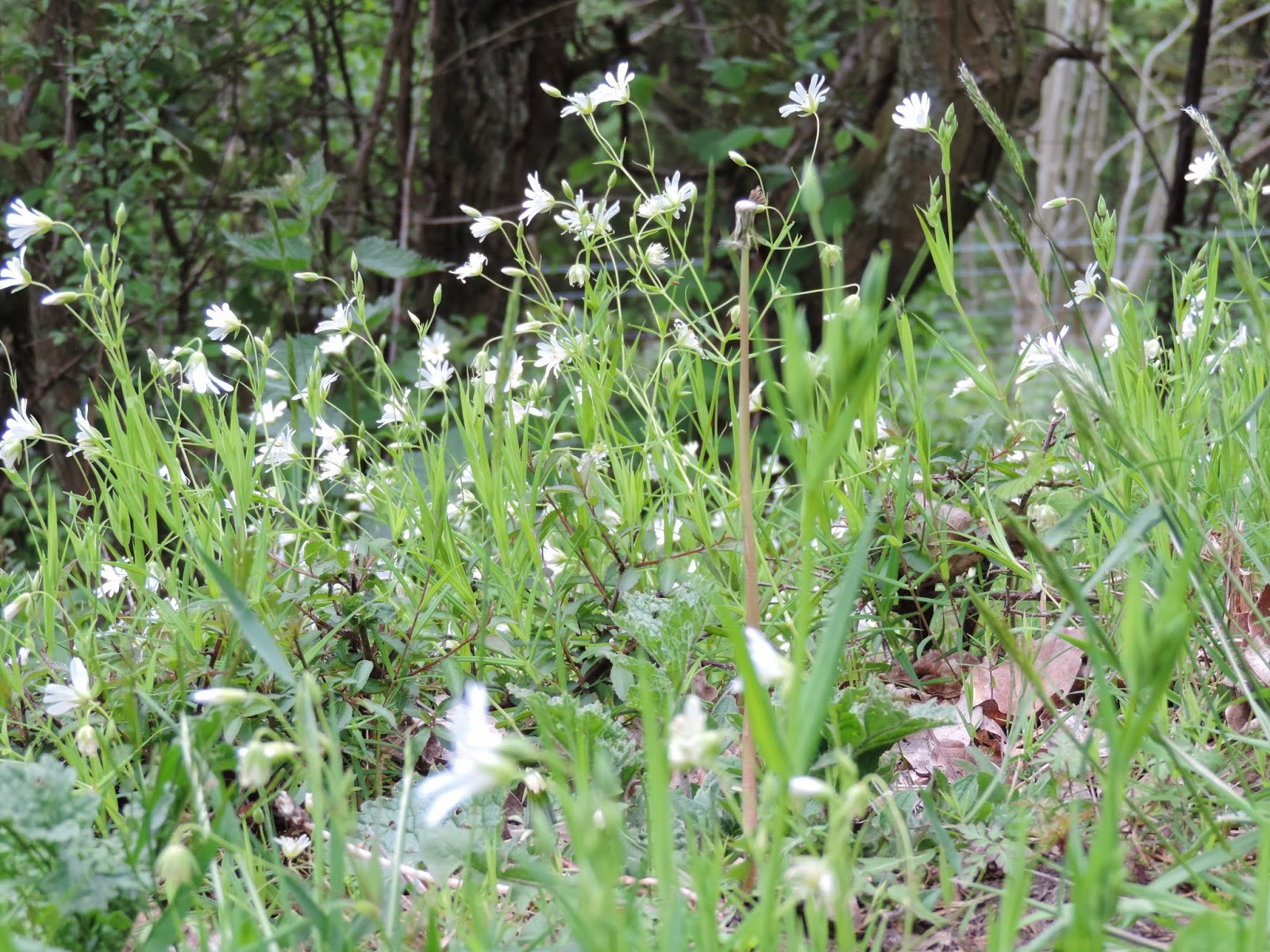
Staff and volunteers visited Walcot today to see how the woodland is progressing. When the land was originally purchased in 1995, it was very overgrown. Now, thanks to careful management from staff, volunteers and sheep, the woodland is bursting with wildflowers. It is a beautiful area, with lots of flora and fauna, well worth a look!


Wednesday, 30 April 2014

Muntjac on the Mynd

This lovely bit of footage shows a muntjac deer on the edge of the Long Mynd. These deer are native to China but were introduced to England, and are now a common sight here. Though they are often seen on Wenlock Edge, this is the first sighting of one on the Mynd! Thank you to Mags Cousins for the footage

Monday, 7 April 2014

New Bird Feeders

We have put up some new bird feeders! Pop down to the bird hide to see what you can see.

This siskin and blue tit flew in as soon as the new feeders were up!

Wednesday, 2 April 2014

Peregrine Nest

Work is underway to monitor the peregrine nest. A camera was bought with money kindly donated by Steven Matthews of Darwin Matthews Solicitors, Shropshire Members Centre and the Peregrine Group, and has been set up to monitor the nest, which in previous years has been affected by predation. This year we are hoping to find out what has been predating the nest, and if possible prevent, with the use of dazers, which emit a high pitch noise. We will keep you posted with any updates!

Thursday, 13 March 2014

Trout

 Have you been sitting by the reservoir and seen ripples in the water? Or maybe you were walking past the ponds and thought you saw a fish? The water ways of Carding Mill Valley is often home to Brown Trout, who can sometimes be seen jumping out the water to catch hovering flies! Volunteers Isabel and Gill found this trout in the stream, which is pretty big! If you see fish feel free to try and catch them (good luck, they're very fast!) but please don't keep them in the bucket too long, they need the cold, fast flowing water of the stream!

Saturday, 8 March 2014

Frog Spawn

Its heading towards Spring! Around this time of year we start seeing frog and toad spawn in our ponds, which means one thing: tadpoles! Sadly last year there were very few tadpoles and almost no frogs or toads. This is because lots of people took frog spawn.

So, this year, please leave our frog spawn where it is, so everyone can enjoy it!


And if you're by the ponds, keep an eye out for herons, there's been evidence of them having a frog spawn snack!


Tuesday, 3 December 2013

Kingfisher In Carding Mill Valley

Chris has just seen his first Kingfisher in Carding Mill Valley! Kingfishers live by rivers and live in holes in the banks. There is no nesting habitat for them here, however they can occasionally be found in Carding Mill Valley in the winter, along the wider slower stretches, looking for food. The bird Chris saw was likely a young one kicked out of its parent's territory and looking for food. We are very happy to have such a beautiful bird visiting the valley!
Picture from http://digital-photography-school.com/forum/animals-wildlife-sys/108425-kingfisher-flight.html


Friday, 29 November 2013

Mystery Solved!

Isabel has solved the mystery of the mysterious caterpillar! After searching through books and still not finding an answer, this picture was put on iSpot, and a solution appeared almost immediately. This is a Drinker moth caterpillar, or Euthrix potatoria. iSpot is a fantastic website which allows you to post pictures of plants, animals and insects you have found for others to identify.

The Drinker moth

Clearing The Pool

You may remember a post at the start of the month about Crassula in the pool on the golf course. Caroline, our ecologist, has worked hard with volunteers to almost completely remove this highly invasive species, something that has never been achieved before.

The plastic was effective at smothering out the weed, but it was certainly not the prettiest solution. Nick and Richard donned their waders and set to work removing it from the pond.


The pool looks a lot better now, hopefully the Crassula won't make a reappearance.

Wednesday, 27 November 2013

Birds Of Prey

The Long Mynd is a fantastic place to see wildlife, in particular birds of prey. Isabel took this photo of a kestrel hovering near the Portway today, but there are also buzzards, red kites, merlins, hobbies, and sometimes peregrine falcons.

Mystery Caterpillar

This cute caterpillar was found behind the reservoir, but we can't work out what species he is! Caterpillars shed their skins several times before becoming moths or butterflies, so it is quite like this is a young one which will change once it sheds its skin. Any ideas?

Monday, 4 November 2013

Crassula In The Pools

The pool on the Golf Course was infested with New Zealand Pygmy Weed, or Crassula, just a few years ago. Rangers and volunteers worked hard when the pool drained: clearing and removing the weed, spraying the edge of the pond and lining it with black plastic to suffocate out the plant. This plant is very invasive and spreads easily, so there was a big worry about it spreading to other pools on the hills. We are now happy to report it has been almost entirely eradicated, which is fantastic news as no one has ever successfully got rid of it before.

Before: The pond with Crassula
There is very little Crassula left, so the rangers are now planning to remove the black lining. This will return the pond to its a natural beauty, a fantastic result!

After: The pond now

The remaining Crassula will be removed by hand, hopefully this will eradicate it completely!

The remaining Crassula


Monday, 14 October 2013

Wax Caps on the Mynd

 Anyone who has walked on the Long Mynd has seen the numerous different types of fungi that live and grow on the hill. This one is a Waxcap, an indicator of old, undisturbed pasture, which is a very important habitat. Lots of different, and often interesting, species live there. The Waxcaps are often brightly coloured, and feel waxy if you touch them. They like areas of short grass, created by the grazing of the sheep. Keep an eye out for them if you are out on the hill.

Having a Dip

Learning Officer Chris Stratton spotted this Dipper opposite the Tea Room in the Valley this morning.  
Dippers like to eat insect larvae and fresh water shrimp, and are often seen near fast flowing water.

Friday, 20 September 2013

Useful Flowers

Assistant Ranger Nick Robinson and John Worrel led a very interesting day this week. They was teaching a group about the uses of plants in dyeing and medicine, as the last part of a course of six sessions:

First a walk in Rectory Wood, where they looked at wildflowers and fungi.


Then back to Carding Mill Valley, to look at the different uses of the plants they had found.


Everyone found the day very interesting, and are keen to get out there and see which plants they can find and use! Keep an eye out for other events that are run in the valley.

Tuesday, 27 August 2013

Heather in Bloom

If you were up on the hills this bank holiday weekend, as many of you were, you will have noticed the heather in full bloom. It smells lovely and is a beautiful sight, so why not take a walk up to the hills and have a look for yourself?
The heather has a beautiful honey smell

If you don't know which route to take, pop in to the valley to pick up one of our leaflets.


And pretty purple flowers


Monday, 22 July 2013

Dragonfly in Batch Valley

A female Golden ringed dragonfly laying eggs in the Batch Valley, there are also a female and male golden ringed in Carding Mill Valley.